
Top 4 Plumbing Repair Questions Homeowners Ask
Homeownership is hard. We live in an environment of instructional videos and favorite “life hacks.” There are several hardware and home improvement stores within a short drive of most homes in League City, offering nearly every replacement or upgrade part a homeowner might need. And with plumbing repair problems, it takes multiple return trips to the store to purchase the one necessary item that was forgotten during the last trip.
At Doctor Cool Plumbing, we understand the temptation to tackle plumbing problems yourself. Below, we explore four common plumbing issues homeowners face, their likely causes, and potential solutions.
Why is my faucet dripping?
That constant drip from your faucet is not just annoying; it can waste hundreds of gallons of water and inflate your monthly utility bill. Faucet leaks usually start inside the valve mechanism. Local tap water carries minerals like calcium carbonate that gradually leave behind rough scale deposits. Every time you turn the handle, these sharp mineral crusts wear down the internal rubber washers, O-rings, and gaskets, creating tiny gaps that let water seep through.
Mineral deposits cause leaks in one or two ways:
- Sediment dries on the surface of the O-ring seal, creating a small gap that lets water seep through.
- Sediment dries on the seal and forms sharp mineral edges that cut tiny grooves into the rubber over time.
While rubber O-rings eventually fail from simple age and wear, mineral buildup is usually the main reason people seek a faucet plumbing repair.
How to fix it:
- Shut off the water: Turn off the water supply under the sink (or at the main house valve). Open the faucet to relieve any remaining line pressure.
- Remove the handle: Pry off the decorative screw cover on the faucet handle, unscrew the retaining fastener, and lift off the handle.
- Remove the valve stem: Use a wrench to unscrew and remove the exposed valve stem. Locate the rubber O-ring near the base.
- Inspect and replace the O-ring: Check the seal for cracks, grooves, or tears, and replace it with an exact matching size and model.
- Reassemble and test: Reinstall the valve stem and handle, restore the main water supply, and check the faucet for leaks.
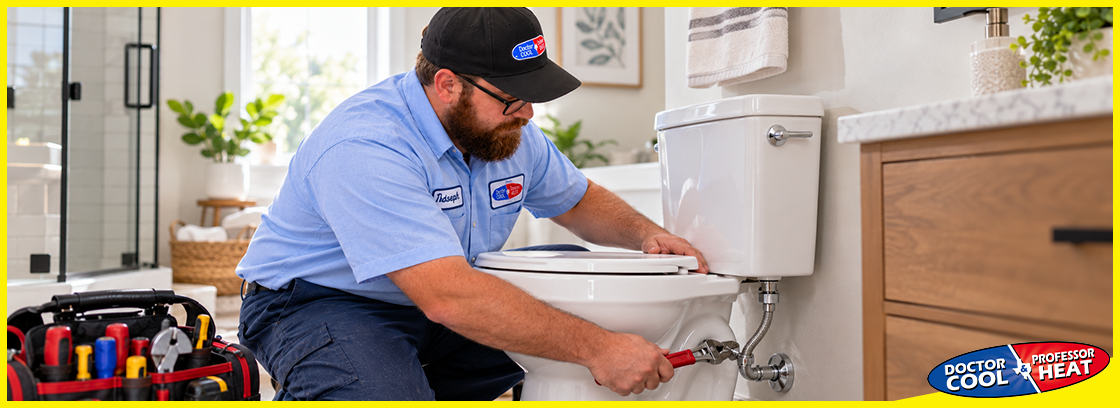
Why does my toilet keep running?
Often, a leak starts like the faint sound of running water, or you might remove the tank lid to find water constantly entering. You can also evaluate silent leaks by adding a few drops of food coloring to the tank—if the color seeps into the bowl without a flush, you have a leak.
With the tank cover removed, check for these common causes:
- Flapper valve issues: The rubber flapper covers the tank outlet. When flushed, a chain lifts the flapper, allowing water to empty into the bowl before floating back down to seal the opening. Inspect the flapper for cracks, warping, or mineral buildup along its sealing edge.
- Chain problems: If the flush chain is too long, it can tangle and get caught underneath the flapper, preventing a tight seal. Shorten the chain if necessary.
- Float or fill valve malfunction: The water inlet valve relies on a float to turn off incoming water when full. If water constantly pours into the overflow pipe, lower the float setting. If water keeps running despite a correct float level, mineral sediment may be trapped inside the valve mechanism.
How to fix it:
- Shut off the water: Turn off the supply valve behind the toilet, flush to drain the tank, and mop up any remaining water with a towel.
- Replace worn components: Disconnect and replace the faulty parts. Replacement flappers unclip easily, while full fill valves unscrew from the supply line beneath the tank. Ensure all gaskets and seals fit snugly.
- Restore water and test: Turn the water supply back on and let the tank fill. Recheck the tank after an hour to ensure no slow leaks remain.
Why are my drains slow?
Slow drains are a frequent household headache, and knowing whether you need a simple cleanup or a major drain plumbing repair depends on where the issue is located:
- Kitchen Sinks: Fats, oils, and food bits are the primary culprits. While cooking greases enter the drain as liquids, they cool and harden inside the pipe, creating a sticky trap for food particles from the garbage disposal. Scraping plates into the trash or compost bin is a wonderful way to prevent these clogs.
- Bathroom Sinks and Tubs: Here, the main offender is a combination of hair and soap scum. Sticky soap residue binds long strands of hair together into dense blockages.
- Whole-House Slowdown: If every drain in your home slows down at the same time, the issue is located deeper in your main sewer line. Call Doctor Cool Plumbing to diagnose and clear this larger system blockage.
The difficulty of clearing a slow drain often depends on how deep the clog is. A quick way to estimate distance is to observe how long it takes for water to pool in the basin.
How to clear a shallow clog:
- Remove the drain plug or stopper.
- Insert a drain snake or flexible zip-tool to break up and extract the blockage. Take care not to let the cable twist back on itself and thoroughly clean the tool after use.
- Flush the drain with hot water, then replace the drain plug.
Why Am I Running Out of Hot Water?
Running out of hot water can happen for several distinct reasons:
- High Demand: If multiple people shower back-to-back or run laundry at the same time, your water heater may simply be overwhelmed. If this happens constantly, your tank may be undersized for your family’s daily needs.
- Sudden Loss of Heating: A sudden loss of hot water usually points to an interrupted power or natural gas supply, a failed heating element, or a broken dip tube. The dip tube routes incoming cold water to the bottom of the tank to be heated. If it breaks, cold water can mix directly with the hot water at the top of the tank.
- Sediment Accumulation: Hard water minerals naturally settle to the bottom of the tank. Over time, this sediment forms an insulating layer over the burner or heating elements, preventing heat from reaching the water efficiently.
Replacing or repairing a water heater requires specialized tools and technical expertise. If basic checks do not solve the issue, contact Doctor Cool Plumbing to schedule an inspection and professional diagnosis.
Need Expert Plumbing Repair in League City?
When DIY fixes fall short, trust the licensed local experts who know League City plumbing inside and out. From stubborn drain clogs and hidden leaks to complete water heater installations, Doctor Cool & Professor Heat has you covered for every plumbing repair need.
Protect your home from costly water damage—call us today at (281) 338-8751 to book an appointment, or request a quote online!