
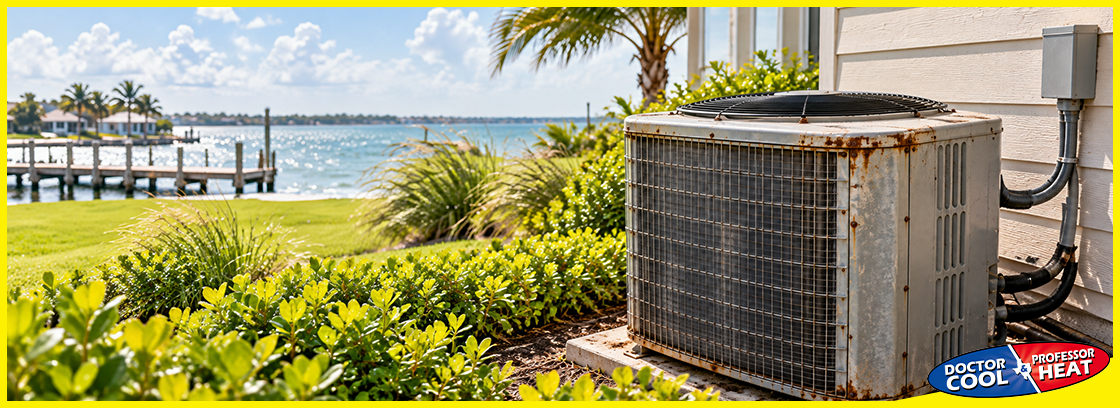
The Hidden Cost of Coastal Air: How Salt Water Accelerates AC Wear in League City, TX
Living along the Texas coast has its benefits: glorious sunsets, proximity to the beach, mild winters with plenty of sunshine, and a refreshing ocean breeze. While the summers are hot and humid, they simply drive everyone indoors to enjoy air-conditioned comfort. Air conditioners are not optional in this region—they are essential for health and comfort. With AC, the positives far outweigh the negatives, making League City a wonderful place to live.
Because air conditioning is so vital to life here, properly maintaining your unit is crucial. Texas heat demands heavy-duty performance, but the salty coastal air presents a silent threat to your system’s longevity. Homeowners need to be aware of this risk and understand the value of regular professional AC repair and AC maintenance.
The Chemistry Behind Coastal AC Wear and Tear
Water molecules are polar, meaning they have distinct positive and negative sides. This structure allows water to easily break down substances like salt through ionization. When salty water coats metal surfaces, it accelerates corrosion—a process we commonly recognize on iron as rust. The same deterioration happens to other metals, including the copper and aluminum in your AC’s outdoor unit (the condenser). Over time, salty sea air continuously attacks these metal components, leading to serious mechanical failures needing AC repair.
Coil Corrosion and Formicary Decay
The exterior of a condenser unit consists of a network of copper tubing and thin aluminum fins. During the cooling cycle, these coils carry hot refrigerant gas while a central fan draws outside air through the network to cool it down. As salty sea air coats the fan blades and aluminum fins, it triggers chemical reactions that cause microscopic pitting. Over time, this corrosion eats tiny pinholes into the metal tubing, allowing refrigerant to leak out. Without sufficient refrigerant, your system loses its ability to cool. This requires a trained HVAC professional to diagnose and repair the issue.
Electrical Component Degradation
Because water and electricity don’t mix, an outdoor condenser’s electrical components are well protected from rain. However, these compartments aren’t airtight. Salty sea air easily penetrates these spaces, causing corrosion and microscopic pitting on the copper wiring and terminal connections. Left unaddressed, this leads to electrical arcing, tripped breakers, and system failure.
Fan Motor and Casing Rust
The condenser cabinet and fan motor housing are typically made of steel, which remains vulnerable to salt air. While painted surfaces offer some defense, that protection is limited. Rust isn’t just an eyesore—corrosion on the motor shaft or fan assembly creates imbalance, putting extreme strain on the bearings and eventually causing total motor failure.
Signs Your League City AC Unit Is Suffering from Salt Damage
Because saltwater corrosion occurs gradually, the damage often goes unnoticed by League City homeowners at first. However, catching it early can save your system. Keep an eye out for these key AC repair warning signs:
- White Powdered Residue: A white, powdery buildup on large surfaces like fan blades or the outer cabinet is an early indicator that salt is actively corroding the metal.
- Unexplained Breaker Trips: Salt buildup on electrical connections often causes sudden service disruptions and tripped circuit breakers.
- Rising Energy Bills: As corrosion degrades components, your AC must work harder to cool the home, driving up monthly electricity costs.
- Loss of Cooling Power: Pitting along the condenser tubing eventually leaks refrigerant, leaving your system unable to produce cold air.
Protecting Your HVAC System Against Salt Air Degradation
Recognizing the threat of salt air is half the battle. Fortunately, taking proactive steps can significantly extend the lifespan of your outdoor condenser unit in League City.
- Rinse Coils with Fresh Water: A few times a year, gently spray down your condenser coils with a standard garden hose to flush away salt residue. Never use a pressure washer, as high-pressure water bends fragile aluminum fins. Avoid spraying inside electrical enclosures—leave internal washing to the pros.
- Schedule Annual Professional Maintenance: Routine maintenance is essential for any HVAC system, but it’s critical along the Gulf Coast. A professional AC repair technician will apply a chemical coil rinse, inspect electrical contacts for corrosion, and verify optimal refrigerant levels.
- Upgrade to Coastal-Grade Equipment: While average AC systems last 15 to 20 years inland, coastal units often face a shorter lifespan due to salt exposure. When it’s time for a replacement, ask your HVAC technician about specialized coastal units equipped with epoxy coatings, corrosion-resistant fins, and stainless-steel hardware.
Schedule Your League City AC Repair and Maintenance Today
Don’t let coastal salt air shorten your home’s air conditioner lifespan or drive up your monthly energy costs. The certified experts at Doctor Cool AC Repair specialize in diagnosing, repairing, and protecting HVAC systems throughout League City, Texas. Call Doctor Cool AC Repair today at (281) 338-8751 or visit our Contact Us page to schedule your service appointment!