
AC Repair or Replace? What You Need to Know About the R-22 Phase-Out
Have you been told that you need to replace your air conditioner because it uses the refrigerant R-22? Do you want a second opinion and further information? Here are some of the relevant facts.
Ozone Depletion
- The earth has a thin layer of ozone near the outer reaches of our atmosphere. Normal oxygen molecules have a chemical formula O2, but ozone is O3, with an extra oxygen atom.
- Ultraviolet (UV) rays from the sun have just the right frequency to detach that extra oxygen atom from ozone. This reaction reduces the amount of ultraviolet rays that reach the earth. Ultraviolet rays cause sunburn and skin cancer, so reducing UV light is important.
- Some natural functions, like lightning strikes, create ozone, but the supply is not endless. We need to protect this layer to protect life on earth.
- R-22 is an older refrigerant; the gas used in air conditioning to move heat into or out of a space. R-22 is a hydrochlorofluorocarbon (try saying that 3 times fast).
- Ultraviolet rays also have enough energy to break chlorine away from R-22. Chlorine atoms are very reactant and pull the extra oxygen atom from ozone molecules, reducing the amount of ozone available to prevent UV light from reaching earth’s surface.
Scientists discovered this danger and produced more environmentally friendly refrigerants.
EPA Regulations
The U.S. Environmental Protection Agency is intentionally phasing out the use of R-22. Their clear communication led to:
- Manufacturers ceased to make air conditioners that use R-22 on January 1, 2010.
- Manufacturers ceased making R-22 on January 1, 2020. This gas cannot be manufactured or imported to the U.S.
- Whenever the supply of R-22 is used up, it will be gone. The law of supply and demand is making R-22 very expensive, so it is important to make the right move concerning AC repair and replacements for air conditioners that use R-22.
Making an Informed Decision
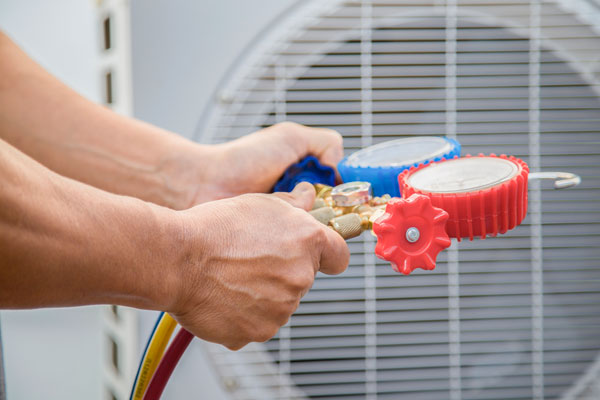
With the information listed above, here are five considerations to help you determine whether to AC repair or replace an R-22 air conditioner.
- Find the data tag on your condenser unit, the outdoor portion of the system. The tag should list the refrigerant used, revealing whether it uses R-22 or not. Systems with a manufacturing date before 2010 used R-22, while those manufactured in 2010 or after did not.
- The average useful life of a residential air conditioning system is 15 to 20 years. Systems manufactured prior to 2010 will be approaching the end of their useful life span. Making a costly AC repair at this stage must have some pretty extreme extenuating circumstances to warrant the high cost of replacing R-22.
- Air conditioning systems lose efficiency gradually, by about 5% per year. Add the continued cost of energy inefficiency to the AC repair costs for a true understanding of AC repair over replacement.
- If you know that you have an old R-22 system and want to use it as long as possible, be sure to keep it well-maintained and in good working order. If it seems to work well and keeps your home comfortable, continue to use it. However,
- A planned replacement is always preferred to an emergency replacement. If you know the system is failing, budget for and plan a time to replace the system. This prevents releasing R-22 into the atmosphere unnecessarily. It also prevents an inconvenient replacement with delays during a late summer heat wave.
Making the Right Move: A Homeowner’s Guide to AC Repair in the R-22 Era
Don’t let an aging R-22 unit leave you stranded in the heat during a late summer wave. Our experts can help you weigh the costs of maintenance versus replacement to ensure you make the most informed decision for your home. Contact Doctor Cool today to schedule your AC repair appointment and keep your system running efficiently all season long.