
Prevent Emergency Plumbing Repair: How to Winterize Your Texas Home
When an Alberta Clipper reaches South Texas, our preparation technique starts with a quick trip to the grocery store, and then home to batten down the hatches until the storm blows through. Often, we remember other preparations that we could have or should have made, and wonder if we will regret the omission. One of those steps is to prepare outdoor water sources for severe cold temperatures. The damage and inconvenience that stem from frozen pipes can largely be prevented by planning some precautions in advance of the storm.
Essential Outdoor Maintenance to Skip the Plumbing Repair Bill This Winter
First, pay attention to long-range weather forecasts: meteorologists can give pretty accurate models that identify winter weather patterns. Will the winter be warm and dry? Or will it be cold and stormy, with the possibility of strong winter storms? Short-term predictions should warn residents of falling temperatures a few days in advance, giving homeowners the chance to prepare. Here are some winter plans to prepare outdoor water supplies for severe winter temperatures.
- Locate the main water shut off valve. Open and close the valve to ensure it will close during a frozen pipe emergency. Turn it all the way off and then all the way on again. Locate every other shut-off valve as well, inside and outside. This allows you to shut off the water supply to the problem area while supplying water to the rest of the home.
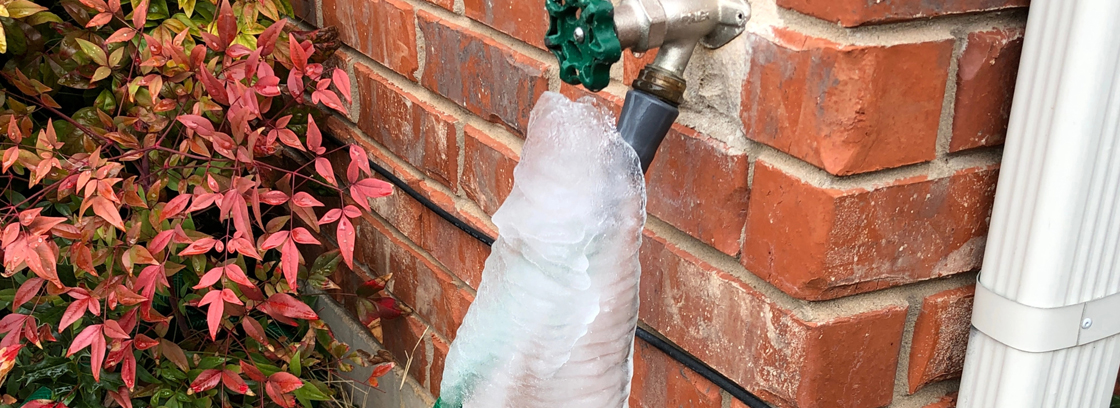
- Uncouple outdoor hoses from the outdoor spigots. It is a mistake to leave the water in a hose under pressure, but it can cause damage to leave the water on during extreme cold. Even when the valve is shut off, the water inside a connected hose can create force that will break the spigot. Most likely, it will also cause the hose to rupture.
- A further solution for protecting an outdoor spigot is to purchase and install an outdoor faucet cover on each outdoor faucet. The cover is made of insulating foam, connects to the faucet, and tightens in place.
- Be sure to insulate water supply pipes that move through garages, attics, or any unconditioned spaces. The extra measure of insulation will generally protect pipes from freezing
- Drain water lines for outdoor water sources, such as sprinkler systems, pools, and ponds. Locate the shut-off valve for the system and follow procedures to drain the lines and winterize the delivery system. Most pool pumps have a freeze protection mode that keeps the pump running to prevent it from freezing. However, if the power supply fails, the pump is in danger of freezing, so the pool lines will need to be drained manually. Do this early, before the arrival of harsh weather, and be worry-free all winter.
- Continue to monitor the weather across the winter: don’t depend upon Punxsutawney Phil. Late winter storms often follow a few days of warm weather, so stay on guard.
Springtime Plumbing Repair Prevention
When spring arrives, slowly reverse some of the precautionary measures: recharge the sprinkler system, remove the faucet covers and store them for next winter. Break out the hose as needed but remember to disconnect the hose after each use. These steps will help protect the most vulnerable portion of your water supply system, the outdoor faucet and pipes.
Don’t Let a Frozen Pipe Turn Into a Home Disaster
Even with the best preparation, a sudden Texas freeze can sometimes catch your home’s infrastructure off guard. If you discover a leak or a broken spigot as the ice thaws, it is critical to address the issue immediately before water damage spreads. Our team is standing by to provide a professional plumbing repair to get your water system back in perfect working order. Contact Doctor Cool & Professor Heat today to schedule your plumbing repair appointment and ensure your home stays dry and functional all season long.